The word SEO has probably been drilled profusely into your mind, and naturally, when that happens, it can become something you either feel excited about or dread (we hope it’s the former). After all, it’s fantastic to see so many businesses getting into the trenches of SEO, but there’s an equally important element that is often overlooked: the content that holds your strategy together. Or even simpler, your SEO content strategy.
If you’re sitting there wondering what on earth that actually means, stay with us. We’re spilling the secrets on why content is just as vital as on-page SEO fundamentals, and vice versa.
Forget Keyword Stuffing: Welcome to Modern SEO
Keyword stuffing… we’ve been told to avoid this one like the plague. Under no circumstances should you just slap a bunch of keywords together and hope for the best – that’s the fastest way to derail your strategy before you even get off the mark.
That’s sound advice, and it’s still absolutely one hundred percent true. Modern SEO is a lot more exciting; it picks your brain and prioritises intent above all else. You see, Google understands exactly what your audience is looking for, and it will feed them that information, if it is deemed worthy. And the only way to get there is by creating high-quality content that actually engages them (yes, both search engines and your audience!).
How Content Fuels Your Search Engine Rankings
But how exactly does content fuel your SEO rankings? Google is constantly skimming through thousands of websites and blogs, looking for the most relevant content to gift wrap and present as the perfect answer for your audience.
You can have your keywords, backlinks, and site optimisation perfected in every way, but content is what establishes connection, and connection is what draws your customers in for the long run.
Now, let’s imagine for a second that your audience clicks on your link and is greeted by a robotic, slightly overwhelming wall of text that reads as though no thought has been put into it. Will they stay? Or, let’s toss out the hypothetical: Would you stay? Probably not. You’d click away in frustration and move along with your day, leaving them with nothing but a fleeting click metric and a spiked bounce rate. When Google sees users fleeing your site that quickly, it’s a signal that your content isn’t holding their attention.
This is why your SEO writing strategy matters. And if your marketing team is insisting it doesn’t, maybe it’s time for that meeting – the one where you go through the numbers and realise something’s not working (spoiler: it’s the content!).
The Power of AI and Human Creativity
When it comes to using AI in content creation, there’s an undeniable skepticism floating in the air. At first, the shift was quiet. You almost wouldn’t notice it as people experimented behind closed doors, whether that was in the office, at home, or during a cheeky, ‘let’s see what this AI is all about’ late-night session.
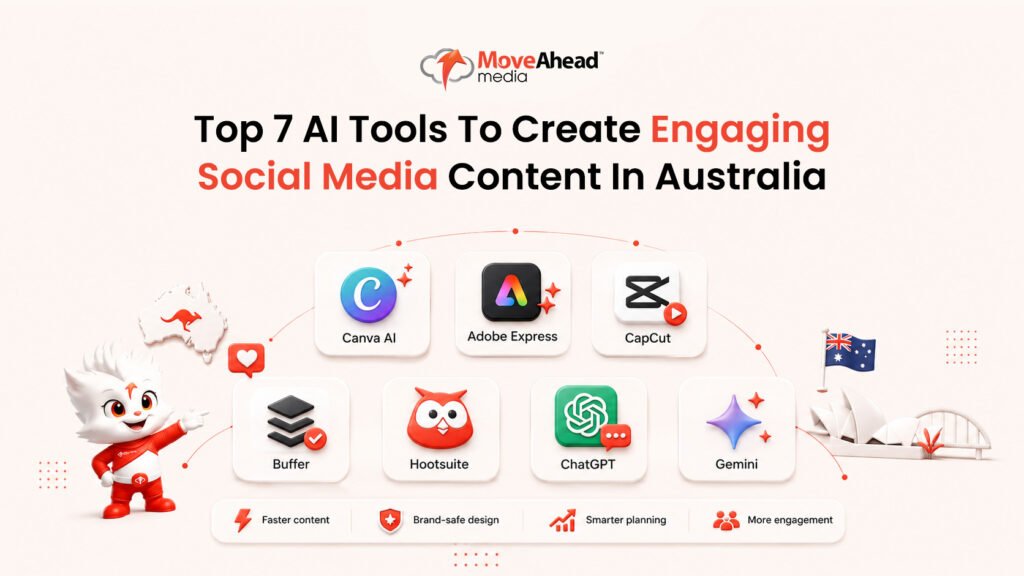
Fast forward to today, and everyone is jumping on board, using tools like ChatGPT or Gemini to help build out their content. Don’t worry, we’re not here to knock it; in fact, it’s an incredibly effective tool when used the right way.
If your SEO content marketing strategy looks like dishing Gemini a quick prompt and hitting generate with no human flair to it, then you’re blending in. Your content is background noise. It becomes completely unmemorable, not just to your audience but to Google itself (hey, Google page 7). On the other hand, human creativity turns the tide, and allows you to stand out in a sea of mediocre content.

Crafting Aussie Stories That Rank and Convert
In Australia, we like to get straight to the point. Most people can spot generic AI content from a mile away (and we’re sure you can, too). Does it build trust? Or does it sound like bland oatmeal that nobody actually wants to swallow?
The number one rule for storytelling, even through an SEO lens, is authenticity. When your content feels genuine, people naturally want to interact with your brand in a way that doesn’t feel forced.
Now, we’ll get to the point. You need to know exactly what your audience is searching for, and then make sure you’re answering their questions – with depth, insight, and expertise.
To get there, you need to understand the E-E-A-T framework. This is exactly how Google judges the quality and validity of your content:
- Experience Google looks for real-world background. Nobody wants to read a post that just echoes the same old information with no unique perspectives.
- Expertise Does your content reflect the authority of someone who deeply knows their industry inside out? Google rewards content packed with deep knowledge and genuine insights.
- Authoritativeness Credibility is everything. When other local industry leaders start linking back to and referencing your work, Google pays attention.
- Trustworthiness You’ve heard the saying: if you don’t have trust, you don’t have anything. That’s not being dramatic; it’s an algorithmic fact. Your content needs to be transparent, secure, and backed up by reliable facts.
Tracking the Success of Your Content
Content that is engaging and authoritative builds trust. You might think your content ticks all the boxes, but data doesn’t lie – it only reveals.
This is where content performance tracking becomes crucial. Tools such as Google Analytics 4 (GA4) and Search Console are exceptional to have in your toolkit because they let you look behind-the-scenes to see exactly where readers are losing interest.
Pulling back the curtains means you can assess whether your keywords are ranking for the terms your customers use. For a deeper dive, Google Analytics tracks metrics like dwell time, scroll depth, and conversions, and when do you ever get that kind of clarity? Fine-tuning your content becomes a breeze.

Partner with Move Ahead Media’s Content Wizards
If you’ve embraced the SEO maze and all of its intricacies, but still aren’t able to captivate your audience, we’re here to help. At Move Ahead Media, our team writes for people first, while taking into account the technical necessities to keep search engines enamored.
Unfortunately, you can’t just wave your wand and create content that instantly hooks your audience. But you can get close. We understand how to balance AI SEO and emotive storytelling, so that your page 1 blog doesn’t attract meaningless traffic, but is a valuable resource for your customers.
Are you an entrepreneur trying to get your website to drive revenue? We can help.
To create a content calendar of your own, download our SEO Content & ROI Checklist today, for expert guidance on how to get the most out of your website and content.