

It’s official. You can’t escape SEO if you want your business to thrive. And if you’ve been bolting every discussion that started with digital marketing and quickly spiraled into SEO jargon, you aren’t the only one.
We know that SEO advice, no matter how well-intentioned, can feel overpowering. Take it from us, the people who work in digital marketing every day, that the foundation of a great SEO strategy is within reach, even for entrepreneurs like yourself.
Still skeptical? Stick around. Our SEO audit guide will alleviate that doubt.
What Is an SEO Audit (and Why It’s Worth Knowing)
Do you know how your website is performing? Maybe you’re overjoyed by the number of leads coming in, or maybe you’re frustrated by low traffic and high bounce rates.
Success or failure – neither of these results tells you why your site is performing the way it is. That’s why you need an SEO audit. It’s the crucial process that reveals any hidden problems within your website and opportunities to fix them.
So, what exactly does an audit cover?

The Key Elements Every SEO Audit Covers
Think back on your last conversation about SEO. Perhaps you were sitting there, nodding politely, but internally sighing: “It’s like they’re speaking another language, and every word is ‘algorithms’ or ‘backlinks.'” (We all know a passionate SEO guy).
Maybe you’ve found yourself doing the same – repeating the same buzzwords to keep the conversation moving, even if you aren’t entirely sure how they apply to your business.
More often than not, entrepreneurs are throwing words in the air with little context or knowledge. We’re here to change that.
Below are the key elements of an SEO audit.
Technical SEO
Don’t worry. We’re going to dial back on the lingo, but a technical SEO audit is imperative for a strong website. Technical SEO refers to the foundation and speed of your site. It covers four key areas:
- Site Speed (Core Web Vitals): How quickly your pages load and become interactive for the user.
- Mobile-Friendliness: Ensuring every element of your site is intact and functional on all mobile devices.
- Crawlability: How easily search engine bots (like Google’s) can find and navigate all the important pages on your website.
- Security (HTTPS): Ensuring your site is secure and trustworthy for both users and search engines.
You can write the most engaging content in your industry, but if your technical SEO is broken, your audience will never see it. That’s every marketer’s nightmare (but it doesn’t have to be yours!).
On-Page SEO
On-page SEO is often the first thing marketers focus on when prioritising SEO. It includes:
- Meta Tags: These are the page title and description that entice users to click on your website in the search results.
- Headers: These use H1, H2, and H3 tags to structure your content, making it scannable for both users and search engines.
- Keyword Placement: This ensures your content naturally answers your user’s query.
- Internal Linking: This practice connects your pages, encouraging users to discover more of your content.
- Image Optimisation: This involves correctly naming and adding descriptive text to images so they contribute to SEO and improve accessibility.
Off-Page SEO
Off-Page SEO is exactly what it sounds like. These are elements you can’t visibly see on your website, but they tell search engines how authoritative and trustworthy your site is.
The two main components you will audit here are:
- Backlinks: Links from other websites that point back to yours.
- Domain Authority: The overall strength and trust your website has earned over time, largely driven by the quality and quantity of your backlinks.
Content Audit
Turning a blind eye to your content is simply the wrong move. We can’t stress this enough. It’s the equivalent of using Facebook to post every minor inconvenience from 2008, while everyone else is running targeted video campaigns. It’s just not…right.
Content isn’t the cherry on top. It’s indispensable if your goal is to increase your visibility in search engine results.
A website audit helps you assess:
- Content Quality and Depth: Identifying content that is thin, poorly written, or fails to fully answer the user’s search query.
- Outdated Information: Finding articles or pages that contain broken links, old statistics, or irrelevant information.
- Content Gaps: Spotting areas where your audience is searching for answers, but your website has nothing to say.
UX and Engagement
The final element of an SEO audit is UX and Engagement. Why does this matter? That’s simple. These metrics illustrate how easy it is for a user to find what they’re looking for on your site.
Here’s what it answers:
- Usability: How intuitive is the site layout? Can users easily navigate the site, regardless of their device?
- Conversion Optimisation: Are your Calls-to-Action (CTAs) clear and compelling?
- Engagement Metrics: Analysing data points like bounce rate and time-on-page to see if visitors are actually interacting with your content.
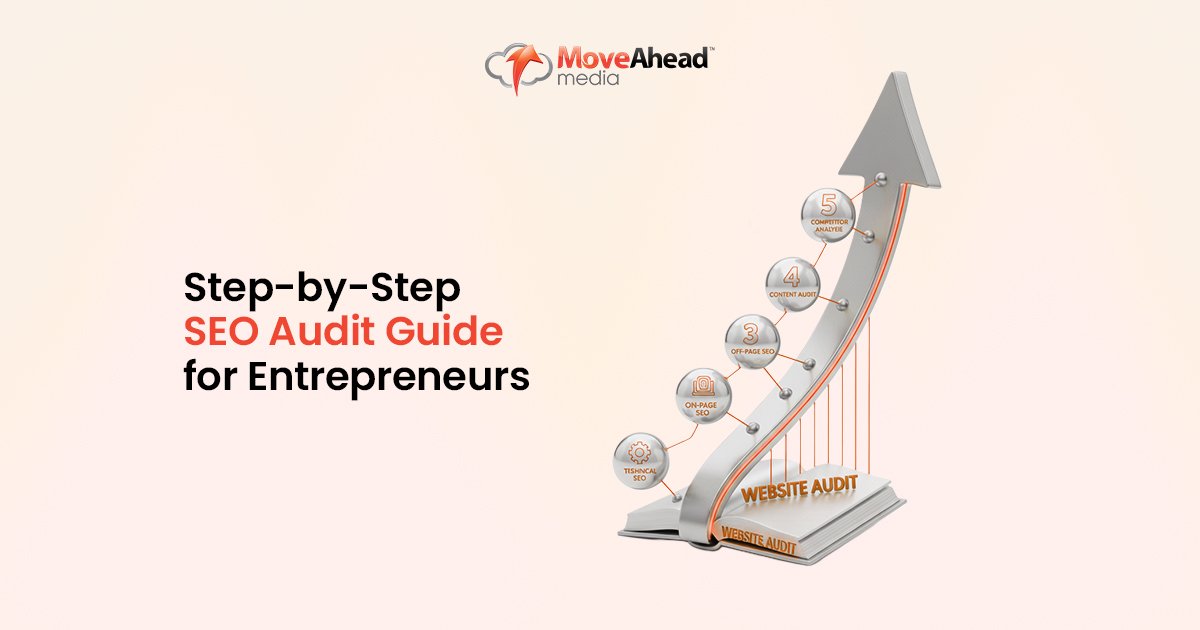
Step-by-Step SEO Audit Guide for Entrepreneurs
So, you know what a website audit covers. Now what? This is where we spin all that newfound knowledge into actionable steps your business can take.
Let’s break it down further.
Step 1: Technical Foundation
You can’t change what you don’t know. So naturally, the first step is to assess your site’s health. Use Google Search Console to ensure Google can easily find your pages, and PageSpeed Insights to confirm it’s fast, secure, and friendly to mobile users.
Step 2: On-Page Optimisation
We’re done with sprinkling random keywords (they’re not pretty decorations). Review your top pages and ensure your Meta Tags are compelling. Structure your content clearly using Headers (H1, H2, etc.) so people can scan it quickly. Use your website’s CMS or simple SEO browser extensions.
Step 3: Content & Quality Gaps
Many businesses underestimate the power of good content. People trust words, but they don’t trust empty ramblings. Identify thin articles or data that cite irrelevant statistics. Then, look for content gaps using Google Analytics or Search Console. Your audience is always asking questions. Are you answering them?
Step 4: Off-Page Authority
Backlinks. A marketer’s favourite buzzword. The internet’s popularity contest. This is a vital part of building trust. Use Ahrefs, Semrush, and Google Search Console to see who is validating your site.
Step 5: UX & Engagement
You have the traffic. But, are users staying or running for the hills? You can absolutely measure this – and you should. Analyse Bounce Rate and Time-on-Page in Google Analytics to see if people are sticking around. Ensure your Calls-to-Action (CTAs) are clear. There’s a time and place for an escape room, but your website just isn’t one of them. The easier your site is to navigate, the more results you’ll see.
If your head is spinning after that list, don’t worry. Once you let these elements marinate, it becomes a lot less intimidating.
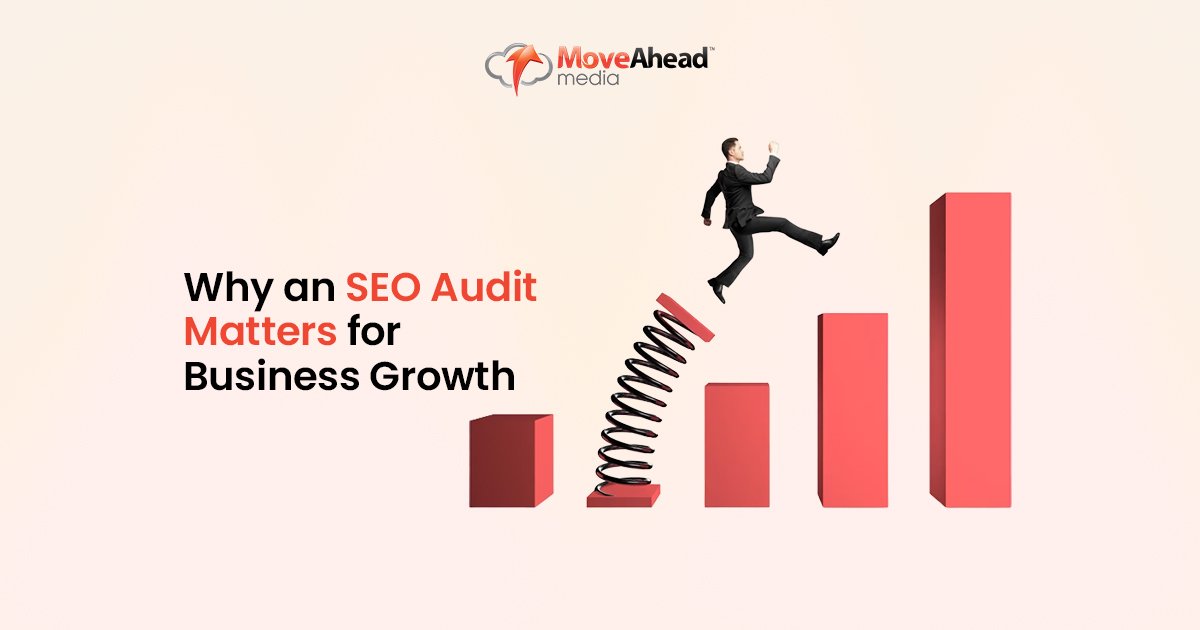
Why an SEO Audit Matters for Business Growth
You might be wondering how an SEO site audit can accelerate your business growth. It sounds beneficial on paper, but time-consuming at the same time…Is it really worth all the effort?
Yes. But not just because we’re biased. An SEO audit gets you:
- Better Visibility
You’re not speculating anymore. The answers are in the data. Simply put, an audit fixes the technical flaws and content gaps that keep your business from getting found. Trust us when we say you don’t want to end up being Google’s best-kept secret (It’s not as exclusive as it sounds). More eyes on your site means more qualified leads and a direct impact on your sales funnel. - Improved Traffic
Imagine attracting customers who aren’t just bystanders, but somebody genuinely interested in your service. Real opportunities to convert? That’s the dream. This is what you get when you focus on optimising your content and fixing the user experience. You attract reliable, qualified visitors, not just passive scrolling. - Smarter Marketing Decisions
Last but certainly not least, it provides you with clarity to make better decisions for your business. You’re getting a data-driven plan to outpace your competitors, keep up with algorithm changes, and ensure you aren’t wasting your budget and time. (Did we mention it’s data-driven?) What more could you ask for?
Common Mistakes Entrepreneurs Make with Website Audits
Of course, with all things marketing, there’s plenty of room to make mistakes. But with our years of experience, we want to help you avoid them.
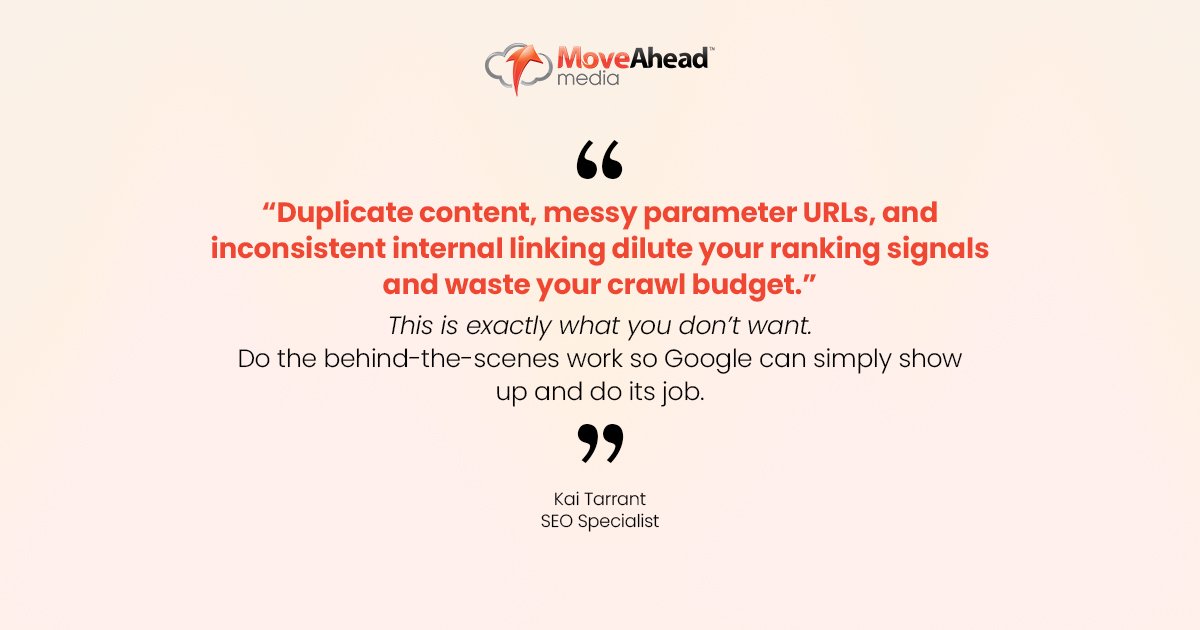
We spoke to our SEO specialist, Kai Tarrant, who told us that the most damaging mistake many entrepreneurs make is accidentally teaching Google to ignore their own website.
As Kai puts it:
“When you have duplicate content, messy parameter URLs, and inconsistent internal linking, they dilute your ranking signals and waste your crawl budget.”
This is what you don’t want. Essentially, you want to do the behind-the-scenes work so that Google can just show up and do its job.
Below are key website audit mistakes to keep an eye out for:
- Ignoring Technical issues
This is your foundation. Neglecting these errors will only set you back. Before you address anything else, make sure your technical SEO is actually functional. - Only Using Free Tools
We know it’s tempting to rely only on free SEO tools, but at some point, you need a specialised, higher-level tool. Investing in paid software helps you effectively analyse your competitors and uncover new opportunities. However, if you are just starting, Kai suggests mastering the essentials first:
“Stick to Google Search Console for indexing and performance, Google Analytics for engagement signals, and Screaming Frog (free version) for technical site audits. Everything else is secondary.” - Skipping Post-Audit Actions
SEO has a certain allure. You do an audit, receive a comprehensive analysis, and feel like you’ve “done the SEO.” It’s one and done, just for the aesthetics. But if you aren’t turning those findings into a prioritised action plan, you haven’t actually improved your business. That’s a costly mistake.
When to Seek Expert Support (and What to Expect)
Becoming well-versed in SEO is a significant advantage. All it takes is learning the fundamentals, and you’re already ahead of most marketers.
However, we understand that not all businesses can dedicate time to master the technical nuances, especially when you have a million things competing for your attention.
Think back to why you started your business. It was likely to make an impact in your industry, not to spend your weekends deciphering crawl errors and broken links.
Seeking expert support can help you hold onto that vision while ensuring your SEO foundation isn’t built on shaky ground. It’s carefully audited, down to every last technicality.
Need specialised guidance with your SEO audit? Contact our team at Move Ahead Media today!