

For hotel owners, visibility is a game-changer. With most travellers relying on Google Search and Google Maps to plan their trips, a well-optimised Google Business Profile can make all the difference to whether a guest discovers your hotel – or a competitor’s.
An optimised business profile for hotels acts as a digital shopfront, showcasing your property right from the moment a traveller starts searching. From guest reviews to photos, amenities and location details, your profile shapes a traveller’s first impression – before they ever even visit your hotel website.
In the hospitality industry, where trust and reputation drive bookings, really understanding how important a Google Business Profile is can be a total game-changer for your entire digital strategy. It boosts your local SEO, builds credibility and gives you a direct way to connect with more guests.
Why a Google Business Profile is a Must-Have for Hotel Businesses
A Google Business Profile (GBP) – also known as Google My Business (GMB) – is a powerful tool that helps hotels manage the info you want to share, get in front of relevant search results and connect directly with the people looking for you.
For hotel businesses, this listing is way more than just an address or phone number – it’s a interactive platform that displays all the good stuff – high quality media, guest feedback and booking options that drive real bookings.
When people are searching for “luxury hotels near me” or “family-friendly accommodation in Sydney”, Google often shows a local pack of listings. Having a verified and active hotel business profile makes you way more likely to appear in that pack.
With all the right details, some snazzy visuals and positive reviews, your hotel’s visibility across Google Search and Google Maps is going to improve and will help attract people who are ready to book.
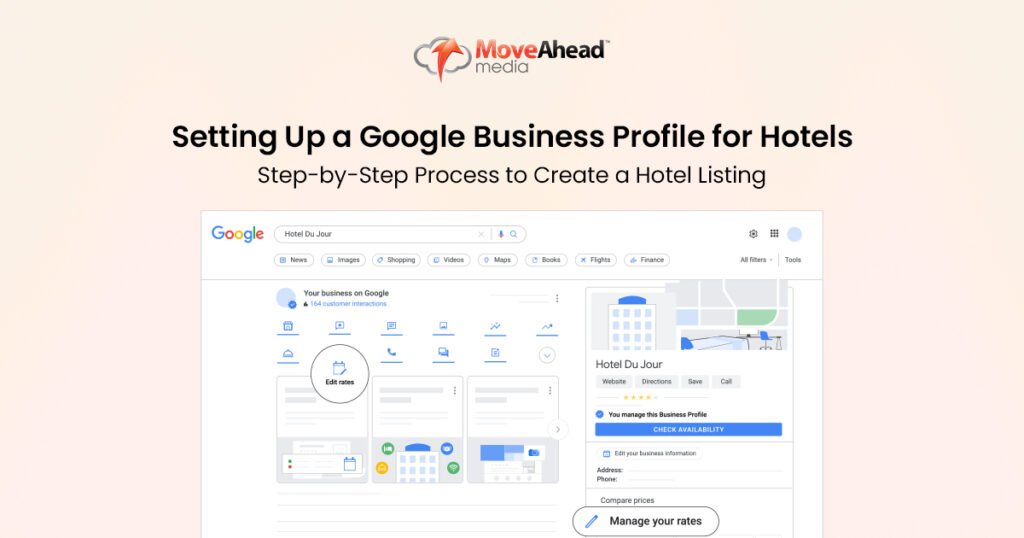
Setting Up a Google Business Profile for Hotels
Step-by-Step Process to Create a Hotel Listing
Getting set up with a Google Business listing is pretty easy but don’t underestimate just how important it is. Start by logging into your Google account or making one if you don’t already have one. Then head to Google Business and select “Add your business”.
- Enter your hotel name exactly as it shows up on your signage and marketing materials. It’s all about consistency across all platforms.
- Choose the right business category – something like hotel, resort or boutique accommodation. This is all about matching up with the right searches on Google Search and Google Maps.
- Enter your full address, including street, city, postcode, and country. This makes sure your property is going to show up accurately in local search results and on Google Maps.
- Add your contact details – your phone number, booking email and a link to your official hotel website.
- Verify ownership. Google will send a code to confirm – either by post, email or phone. Once verified, your hotel’s Google Business Profile is live.
This verified profile becomes the first point of contact for guests – showing off your photos, amenities, guest reviews and links to book.
Optimising Your Google Business Profile
Complete Information Drives Bookings
Once you’ve got your listing verified, it’s time to think about optimising. A complete info profile not only improves your search rankings but also encourages people to engage and book with you.
Get your hotel description, key hotel attributes (like swimming pool, spa, or conference facilities) and accurate check-in/check-out times in there. Add links to your booking process, price details and special offers using Google Posts.
To get more visibility, make sure your profile highlights nearby attractions and local landmarks, accessibility details like wheelchair access and parking, and your latest new amenities and dining options.
Regularly post updates about upcoming events, promotions and local experiences to keep your profile active and engaging.
Add Good Quality Media and Virtual Tours
Photos and videos really make a difference – so get some high quality media in there showing off your rooms, lobby, restaurant and views. Guests are going to be drawn to listings that look great and authentic.
Adding virtual tours lets travellers have a sneaky peek before booking. This makes them more engaged and keeps them on your listing longer – a good sign for search engines and local SEO.
Google favours listings that show consistent engagement through new updates, images and positive reviews, so make sure you’re updating your media regularly as part of your digital strategy.
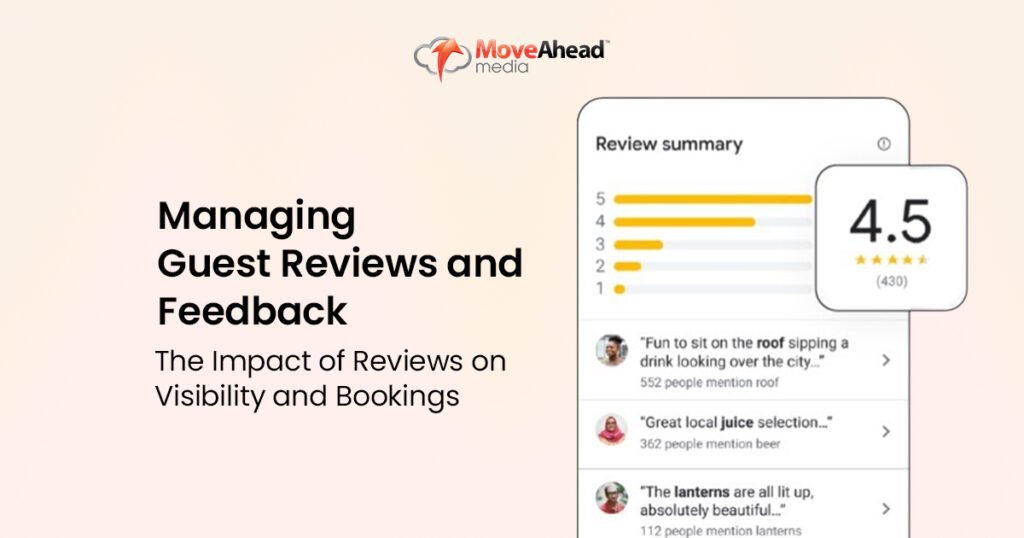
Managing Guest Reviews and Feedback
The Impact of Reviews on Visibility and Bookings
Google Reviews – The Lifeblood of Your Hotel’s Standing are one of the top ranking factors for hotel listings. They establish credibility, sway decision-making and – more directly – affect how your hotel appears in those all-important search results.
Try to get satisfied guests to leave a positive review after their visit. A simple reminder at checkout, or even a follow-up email, can really make a difference to your review count.
Always respond promptly and professionally to every bit of feedback – whether it’s a rave or a complaint. That shows genuine care, and builds trust with both past and – more importantly – potential guests.
- Give a shout out to happy guests in a review, and invite them back in.
- Address tough criticism calmly and constructively – and use it to make improvements.
- Keep an eye on common themes in guest feedback and use them to boost services – or highlight them in future Google Posts.
By responding, you’re also helping Google see your listing as active (and, crucially, your visibility in local searches will get a big boost).
Getting More Out of Your Google Posts
Use Google Posts to share important updates, offers and messages directly on your business profile. Highlight seasonal promotions, or maybe some new wellness packages, or a dining experience that’s just been launched.
Each post can include pics, text and booking links – guiding users to your hotel website. These short updates get a prominent spot in your Google Search results, keeping your business profile looking fresh and active.
Adding a call to action – like “Book Directly” or “Have a look at Our Rooms” – will get potential customers to interact with your hotel directly, and avoid booking through third party sites.
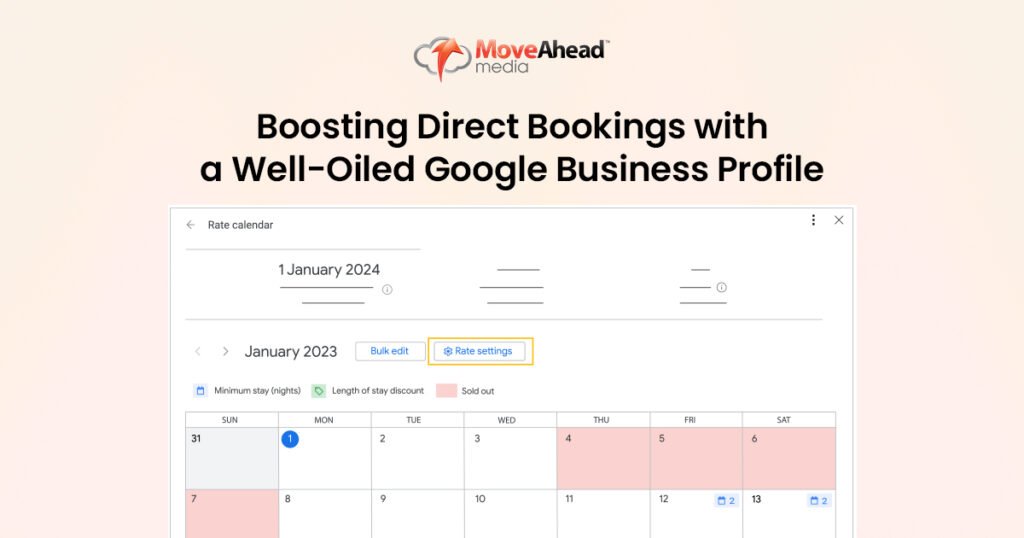
Boosting Direct Bookings with a Well-Oiled Google Business Profile
Having a well optimised hotel’s Google Business Profile is a big help when it comes to getting direct bookings.
Get your booking engine integrated and linked directly to your GBP listing. That way, guests can check availability and book rooms in one go, without ever leaving Google Search.
Google Hotel Ads show your property’s rates right next to OTA listings in the hotel pack – which is the set of results that appear when users search for accommodation. If you keep your rates in parity (no better, no worse, than what OTA’s offer), you’re more likely to get that booking directly.
You can also use booking links in your profile to make the process even easier for guests. When the booking journey is smooth as silk, drop-offs are reduced and so are direct bookings.
Building Trust – Naturally
Trust is one of the most valuable currencies in the hospitality industry. Verified hotel listings with consistent updates, strong guest reviews and a solid reputation all rank higher in local search results.
A verified Google Business Profile tells travellers that your hotel is genuine – and consistently updated with new info like photos of renovations, or new amenities.
Make sure your business listing includes details on accessibility – like ramps and lift access – to appeal to a wider audience. These accessibility features also help search rankings as Google prioritises inclusivity.
Regularly posting updates, responding to reviews, and keeping your contact info up to date builds a solid reputation for reliability – and makes your hotel a trusted choice in local searches.
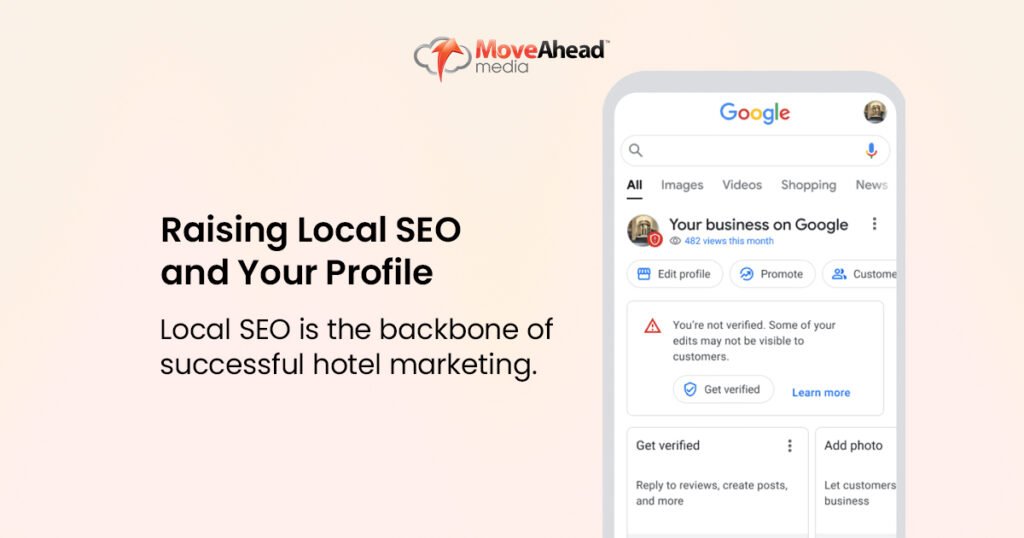
Raising Local SEO and Your Profile
Local SEO is the backbone of successful hotel marketing. When folks search for “best hotels near me,” Google looks for listings that are complete, accurate and kept up to date.
Your Google Business Profile feeds into Google’s local pack, which features the top three nearby hotels on the map. And appearing there can really get your online visibility jumping.
To boost your local search rankings, make sure:
- Your name, address and contact info are correct and consistent across all platforms.
- Your description includes relevant searches like “city centre hotel” or “romantic retreat.”
- Your listing includes hotel attributes like pet-friendliness, Wi-Fi or spa – because those are the things that matter to people.
- And your content highlights proximity to nearby attractions and transport hubs – because those are the things that really matter.
That combination of consistency and relevance will strengthen your presence all across search engines – and help Google display your hotel to users searching in your area.
Getting Value from Insights and Analytics
Your Google Business Profile isn’t just a listing – it’s also a data hub. The built-in Insights feature will help you track performance and understand what’s driving traffic.
It shows you how users find your listing – through Google Search or Google Maps – and which actions they take, like clicking the website link, or ringing the front desk.
These metrics will reveal key areas where you need to improve. For example, if most engagement comes from mobile devices, make sure your hotel website and booking process are all mobile-friendly.
Use these insights alongside Google Analytics to connect listing data with website conversions – so you can see just how effective your digital strategy is, and whether you’re getting a good return on investment.
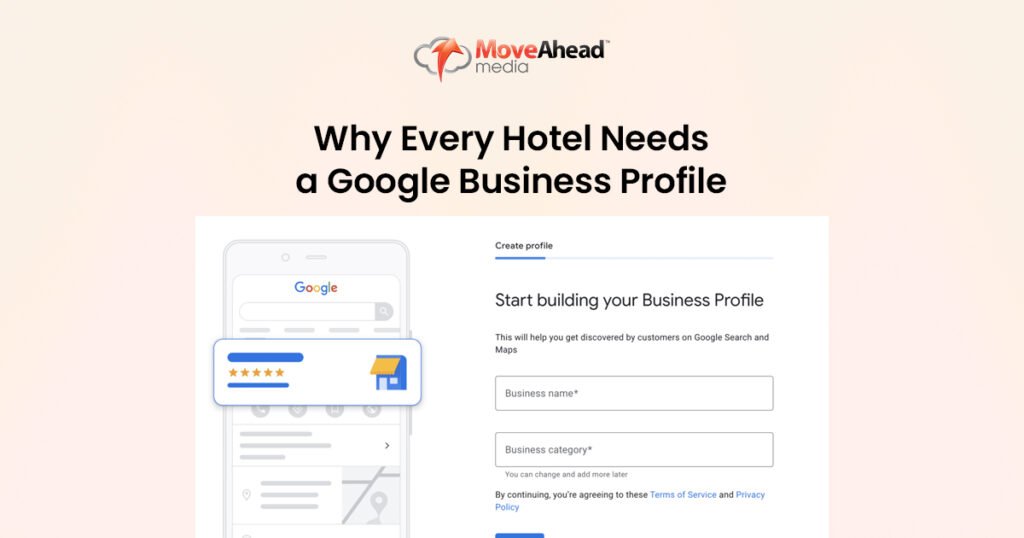
Why Every Hotel Needs a Google Business Profile
Hotel owners need to have a Google Business Profile – its the 1st stop for most travellers and gives them everything they need to decide on staying with you – but not just that, its also got the photos,your pricing ,positive reviews and info on where your hotel is.
A profile thats fully decked out with complete info, accurate details and top-notch media goes a long way in making people actually know about your hotel. And even more importantly, having that profile in tip top shape lets YOU tell your hotels story – how its looked, what people can read and how people get in touch.
Whether you run a small boutique in the city, a beachside resort or even a family run lodge, having a active google business profile will get more people visiting your hotel, sort out your local SEO and mean you get a lot more direct bookings which are gonna boost your profits in the long run.
The Bottom Line
A google business profile for hotels is no longer a nice to have , its a must have for any hotel’s digital marketing & local SEO strategy.
By keeping everything up to date, chucking in some new photos, responding to feedback from guests & using google posts in the right way , hotels can boost their online visibility big time and get more trust from travellers.
Your profile will be the heartbeat of where your hotel shows up on search engines and basically creates a direct link between your place and someone who really wants their next holiday.
In short, a google business profile is actually more than just a showcase for your hotel , its a way to connect with people at the exact moment they are looking to book a room.

FAQs
What’s the fastest way to spot wasted spend?
The fastest way to spot wasted spend is to focus on two key areas: your objectives and your audience.
First, ensure you have clear, measurable objectives. Without a benchmark for success, you can’t identify underperformance.
Second, regularly audit your audience to confirm you’re targeting the right people. Even the best ads can fail if they’re shown to the wrong audience.
What’s the best way to A/B-test creative while still keeping clean data?
The best way to keep data clean is to follow the one-variable rule. Only change a single element between your “A” and “B” versions.
This could be the headline, the image, or the call-to-action, but never all three at the same time. The goal is for you to attribute any performance difference directly to that specific change.
Many marketers make the mistake of stopping their A/B tests too early. By letting your test run long enough, you’ll be able to gather more reliable results with your ad analysis tool.
What metrics actually tell me if my campaign is working?
The ‘best’ metrics depend entirely on your campaign’s primary objective. The key is to align your metrics with your goal in the marketing funnel:
- For Awareness Campaigns, focus on Reach and Impressions to measure how many unique users are seeing your ad.
- For Engagement Campaigns, track Click-Through Rate (CTR) and Cost Per Click (CPC) to measure how effectively you’re driving interest.
- For Conversion Campaigns, focus on metrics that measure direct business results, such as Cost Per Acquisition (CPA) and Return on Ad Spend (ROAS).
Overall, prioritising metrics like ROAS over simple clicks is how you can gain a better understanding of your campaign’s success. It’s what allows you to move from generic to data-driven advertising campaigns.