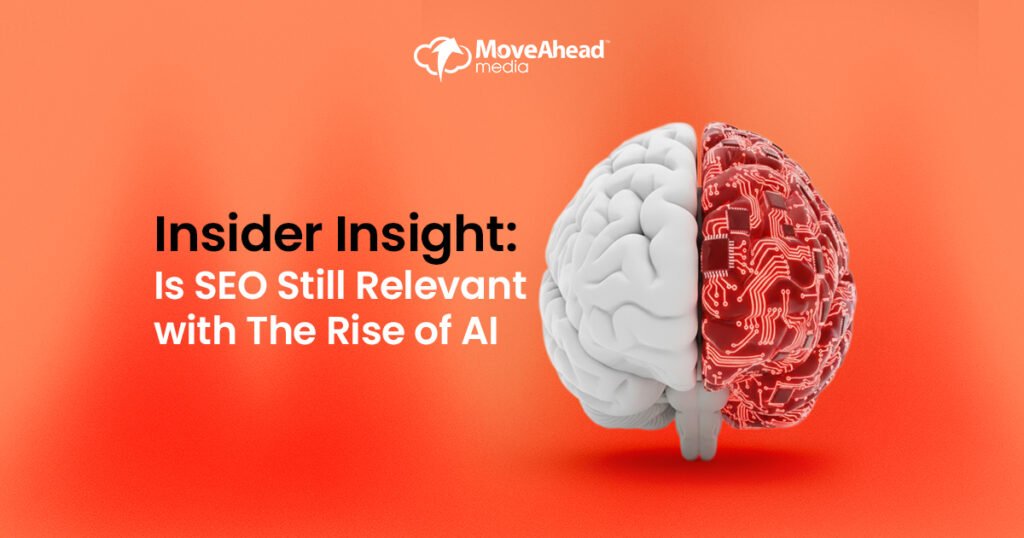
AI is the talk of the town, the internet, and probably your family group chat. It feels like one minute we were trying to understand hashtags, and the next, we’re asking robots to write essays and plan our vacations.
We’re willing to bet that if you scroll through your Instagram right now, you’d come across at least one AI-generated post, if not more. The impact of Artificial Intelligence (AI) is widespread and powerful, and it has many marketers sweating. Specifically, they’re looking at one of the foundations of digital marketing – Search Engine Optimisation (SEO) – and wondering if its days are numbered.
So, whether you run a business with a website or just have an insatiable curiosity for AI, you’re probably asking the same big question: With AI changing the very nature of search, what is the future of SEO?
Let’s break down what’s really going on.
Why is AI affecting SEO?
When was the last time you googled something? You’ve probably noticed the ‘AI Overview’, that magic box that gives you an answer before you even click.
That single feature is reshaping the entire marketing landscape. Why browse through ten links when AI can serve you a perfect summary on a platter? This isn’t just a small change; it’s a massive behavioural shift. The more you resist it, the more you lose out on a powerful tool that could be moving you forward.
Think about it. Just a couple of years ago, we were frantically clicking through websites to self-diagnose a headache. Today, we just ask ChatGPT. It’s instant, easy, and it skips all the unnecessary steps. We can even have in-depth debates and conversations. The progress is extraordinary, and it’s not even at full force yet.
Why does this matter? This convenience comes at a cost for website owners. When users get instant answers, they stop clicking on links. This directly translates into reduced traffic, fewer leads, and lower visibility – potentially erasing years of hard work in building an SEO-focused website.
But this isn’t necessarily a bad thing for SEO. It’s a call for a smarter strategy that evolves with these changes.
The influence of AI on SEO
We know that AI has a massive impact on digital marketing. It’s changing the way we engage with the internet, brands, and even each other.
Here are four fundamental ways AI is influencing SEO today.
- Search is becoming a dialogue
Take a moment to think about your own experience with AI tools like ChatGPT and Gemini. How do you communicate? You’re not just typing keywords anymore. You have questions. You clarify. You have a back-and-forth conversation. This shift from a one-way search to a two-way dialogue plays a pivotal role in SEO. Users now expect in-depth, tailored answers, not just a list of links. - AI doesn’t rank the same
The whole purpose of SEO is to climb up the rankings and get that top spot everyone is competing for. However, AI tools have their own discernment. They focus on content that has authority. They prioritise credibility over keywords and backlinks. In a nutshell, your current SEO strategy probably needs a re-do to keep up with the inevitable AI wave. - Users are asking for more
Searches have become more specific than ever. What used to be a nonchalant, broad target ‘best places to stay in Sydney’ has now evolved into ‘What’s a nice spot to take my husband for a romantic holiday in Sydney?’ Notice the difference in tone? We’re ditching the keywords and getting down to the details. - AI feels more genuine
SEO excels when we rely on traditional ways of using search. Now that we can engage in an actual conversation with AI-powered tools, trust becomes easier to build. This is because AI is spectacular at echoing human-like interactions and stitching together answers that feel personal to us.
The Benefits of AI in SEO
We’ve established that an AI paradigm shift is here. It’s happening whether we adapt or choose to remain complacent. But can we actually harness this change?
The answer is a resounding yes–using AI in SEO comes with many benefits that can significantly advance your business.
- Automation on a New Scale
The sheer amount of AI-based tools designed for SEO says it all. Marketers can now automate time-consuming tasks like keyword research, competitor analysis, and technical audits. Here’s a practical example: where onboarding ten new clients used to be a resource constraint, AI accelerates workflows, allowing businesses to scale at warp speed. - Content Optimisation and Creation
If you work in SEO, you know the soul-crushing chore of creating endless content briefs and articles, trying to weave in keywords naturally. You’ve probably thought, “There has to be a better way”, and now there is. AI moves beyond just scanning for keywords; it understands context, nuance, and intent on a much deeper level. - Data Analysis and Insights
Data-driven strategies pull the invisible strings behind effective marketing. It doesn’t matter how sharp your content is, or how Picasso-esque your creative looks. If you’re not utilising your data, then you’re leaving a lot of untapped potential on the table. The good news is that AI can process large datasets in real-time and even predict future trends, helping your businesses draw up smarter strategies. - Enhanced User Experience
The goal of great marketing is to deliver an exceptional user experience – that’s what solidifies trust and customer loyalty. The biggest obstacle has always been scale: how can you tailor these experiences to everyone? AI has it figured out. By analysing user behaviour and preferences, AI provides a unique opportunity for personalisation. That means you can create a customised journey for every user, feeding them with content and messages that speak directly to them.
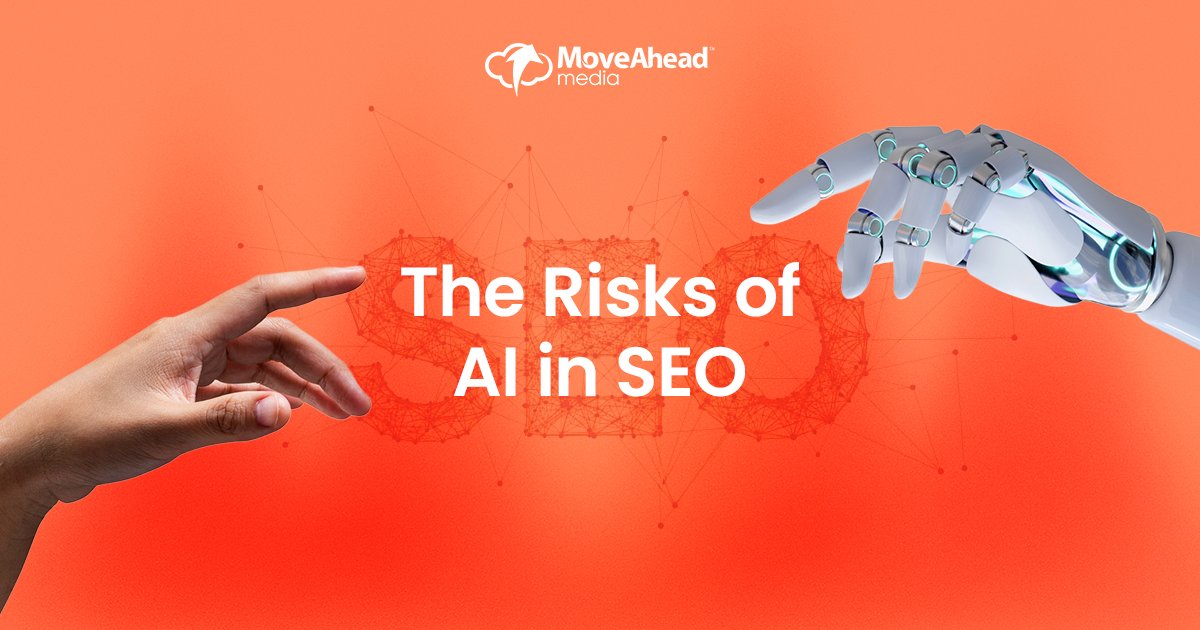
The Risks of AI in SEO
It’s simple: learn how to use AI in SEO while it’s still fresh, and you’ll have a significant advantage. But that doesn’t mean AI is without risk. It absolutely has its downsides, and if you’re not careful, they can backfire on your business.
- AI Creates Echo Chambers
AI knows more about you than you think. It analyses your past searches, clicks, and behaviour, so if you’re searching for “how to set boundaries” at work, the AI probably knows you’re dealing with a prying boss. As a result, it will feed you content that reinforces your current perspective, over and over. But it’s not just your personal data. The AI also learns from society’s collective data, making it a magnet for our existing biases. It will naturally present the dominant viewpoint as fact, making alternative perspectives harder and harder to find. This can be a huge risk, and it happens so subtly that we often don’t even notice. - It Discourages Deeper Research
Have you ever taken the AI Overview as the final answer? No questions asked, no shred of doubt. It could be an incomplete picture, but the instant trust we place in it is rock-solid. This convenience poses a huge risk to our critical thinking skills. Since the birth of the AI overview, we’re less eager to go down the rabbit hole and explore our own curiosity. Why click on a link when you don’t have to? Worse, AI oversimplifies complex topics, feeding our growing need for brevity and stripping away the nuances required for deeper understanding. - It Demotivates Forming Individual Opinions
AI has taken our “work smarter, not harder” mantra to new heights. Instead of reading and forming our own opinions, we’re letting AI do it for us and placing an incredible amount of trust in its conclusions. This behavioural shift poses a problem. It encourages passive consumption of information, reducing the proactive questioning and healthy debate that lead to genuine insight. - AI Overview is Not Always High-Quality
Here’s the scariest part: AI’s all-knowing, authoritative tone. This is how it blurs the lines between fact and fiction – by stating something made up with unwavering confidence. Additionally, the AI is just summarising what it finds. The large language models (LLMs) are simply mimicking actual intelligence by following patterns of words rather than truly understanding the innate complexity of any topic, which means it can easily misrepresent information as whole or complete even when it’s not.
How to Adapt Your SEO Strategy to Include AI
To truly capitalise on AI, it’s essential to realise that black-and-white thinking is what gets most businesses stuck. The real power lies in the grey area, where you use AI to advance your business – refining your strategies, optimising your content, and sharpening your data analysis.
The key is to make AI work with you, not for you.
Here are three ways you can adapt your SEO strategy to include AI.
- Master Answer Engine Optimisation (AEO)
AI Overviews value one thing above all else: relevant content. The algorithm is scanning for authoritative, engaging information that gets straight to the point. When you create content that is clear, concise, and current, you’re signalling to the AI that your answer is the one worth featuring. Plus, these are good SEO practices that you’re probably doing anyway. You might just need a dash of refinement and a little more strategic focus. - Implement Advanced Structured Data
Your content speaks to humans, structured data speaks to the machine. It’s an instruction manual for your page, telling search engines what they’re looking at and why it’s important. This clarity builds trust with the algorithm. By utilising AI tools, you can easily analyse your content and create that structure without a coding expert. - Integrate AI into Your SEO Workflow
AI can speed up mundane processes and provide deeper insights for your business (yeah, we were sceptical, too). But it’s not about replacing human creativity. It’s about fast-tracking the technical grunt work. Using AI to conduct keyword research or generate a content outline is revolutionary because it handles the repetitive tasks, so you can focus on taking the creative leaps AI can’t make.
Ultimately, all three strategies point to one central truth. While AI is unequivocally changing the marketing game, it’s not the threat people think it is.
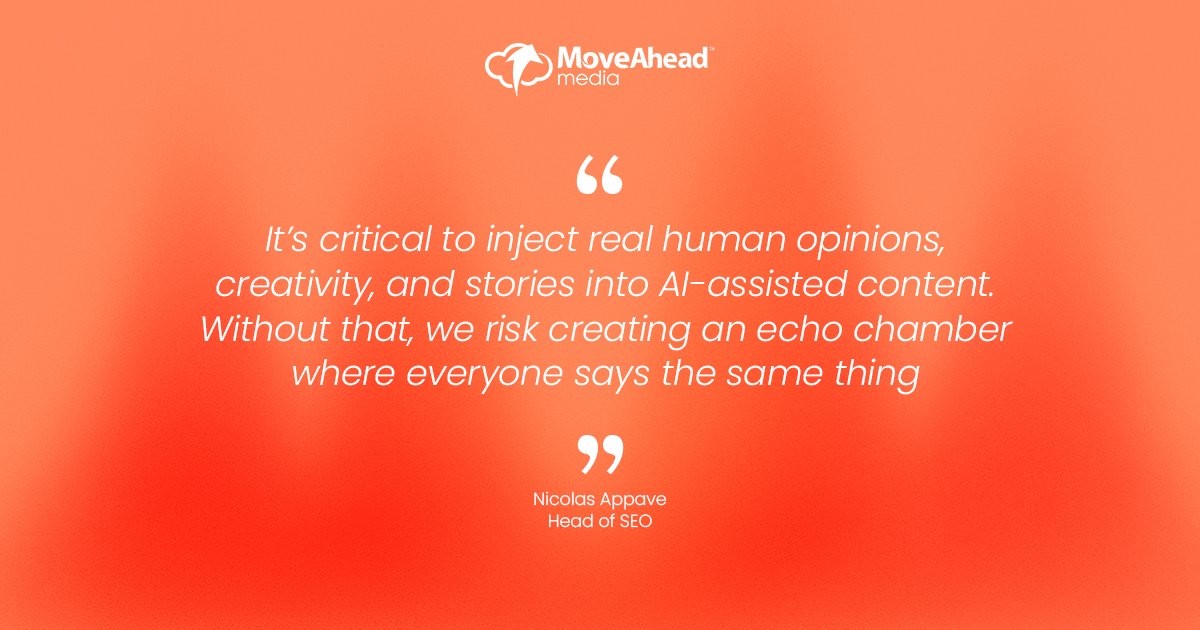
Our Head of SEO, Nicolas ‘Nic’ Appave, has a great way of putting this. He says, “AI is powerful at scaling content, but it can’t experience the world.” He argues that it can’t replace the human perspective that comes from lived experience or fresh insights.
“That’s why it’s critical to inject real human opinions, creativity, and stories into AI-assisted content,” he explains. “Without that, we risk creating an echo chamber where everyone says the same thing.”
AI and SEO in 2026
It’s the hottest question in digital marketing, and the answer is becoming clear. The future of SEO with AI is conversational.
We’re already seeing the shift. People are turning to AI chatbots not just for answers, but for back-and-forth dialogues – for recommendations, planning, and sometimes even for emotional support. This craving for a more human-like connection with technology is powerful, and it’s reshaping our expectations.
At the pace AI is evolving, one thing is certain: users value natural language. They want to interact with technology the same way they’d speak to a trustworthy friend; not just by typing keywords into a search bar.
So, what can businesses do to ensure they’re ahead of the game? If you’re asking this question, then you’re nearly there.
- Optimise for Conversational Queries, Not Just Keywords
This means shifting your strategy from targeting fragmented keywords to answering the complex questions people are both typing and speaking. The rapid adoption of voice search means users are asking full-sentence questions. They’re looking for direct, concise answers that can be read aloud. Focus on creating authoritative and engaging content that explains the ‘how’ and ‘why’ behind a topic. This is what makes your website the most valuable source for an AI-driven LLM to pull from. - Build Your Own Conversational Interfaces
Integrate sophisticated AI chatbots on your own website. Use them as personal shoppers, technical support agents, or product advisors. In this new era of AI, chatbots allow you to build a direct relationship with your audience. - Develop a Distinct Brand Voice for AI
Think about your own connections. What made you gravitate towards certain people? Maybe it was their sense of humour, infectious laugh, or a shared love for animals. The same logic applies to the brands we love. We connect with their voice, their humour, their values – not just their products. Now, as AI becomes the primary voice of your brand, that personality is more critical than ever. You need to define an authentic and memorable persona that reflects your brand at its core. Only then can you ensure that this single, consistent tone of voice is applied everywhere, from your website copy to your AI chatbot.
How Marketing Agencies Need to Evolve and Adapt
You might be wondering how you’re going to put it all into practice.
Don’t worry. The first step is simply understanding the dynamic nature of digital marketing and ensuring you’re open to adapting alongside it.
We asked our Head of SEO, Nic, for his advice on how marketing agencies can evolve with AI.
“SEO has always been about adapting to change – AI is simply the next wave,” Nic explains.
“Right now, the big shift is optimising for Large Language Models (LLMs), which we call Generative Engine Optimisation (GEO), and positioning content to appear in Google’s AI Overviews. The next frontier will be optimising for AI agents; both OpenAI and Google are already building frameworks to shape how the web should be structured for them.”
So, how can agencies stay ahead?
“To stay ahead, businesses need to stay curious, experiment early, and keep a close eye on how these platforms evolve,” he says. “At MAM, that’s exactly what we’re doing.”
Nic emphasises that the role of SEO is evolving, not disappearing. He concludes, “At MAM, we treat AI as an enabler, but human input is what makes content meaningful and differentiated.”
A Free Guide to the AI Tools You Need Today
Many people think AI is the future, but it’s already here. Consider your social media feed for a moment – how does it know exactly how to keep you so engaged that putting your phone down feels like a tug of war?
It’s not a coincidence – it’s by design.
More specifically, it’s the power of AI-driven personalisation.
That same power is ready to revolutionise your business.
Ready to put AI to work? We’ve created a free guide covering the essential AI SEO tools your business needs to thrive.

FAQs
Will AI‑generated content outrank well‑written human content?
Is SEO still worth the effort when AI can answer questions directly in search results?
Should I re-allocate budget from SEO to paid placements in AI chat results?
No, we don’t recommend it. Here’s why. AI systems rely on a strong foundation of trusted, authoritative content to generate answers, which is exactly what good SEO builds. Sacrificing your core asset for an experimental ad format is a high-risk move.
However, you can treat any new paid options as a small, separate experiment, as long as it doesn’t compromise your core SEO strategy.