Backlinks can massively support your SEO growth, but only when they come from sources that are relevant, trustworthy, and useful for those reading your website. Simply accumulating links from anywhere willing to hand them out rarely moves things along anymore, and can just as easily work against you and undo much of the progress you’ve made in other areas.
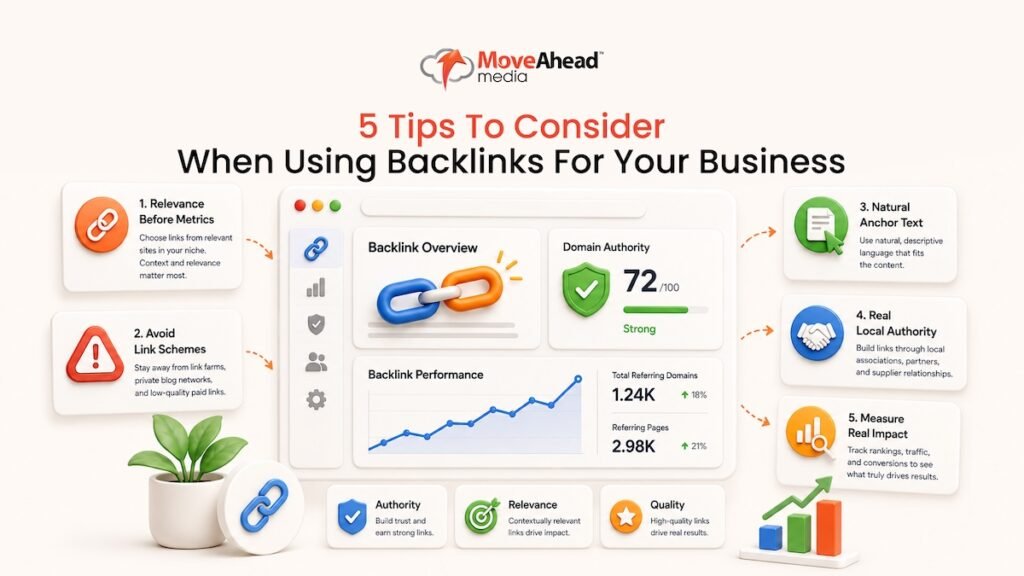
The five tips below outline how to approach backlinks in a way that builds real authority rather than chasing a number that doesn’t guarantee success.
Choose Relevance Before Authority Metrics
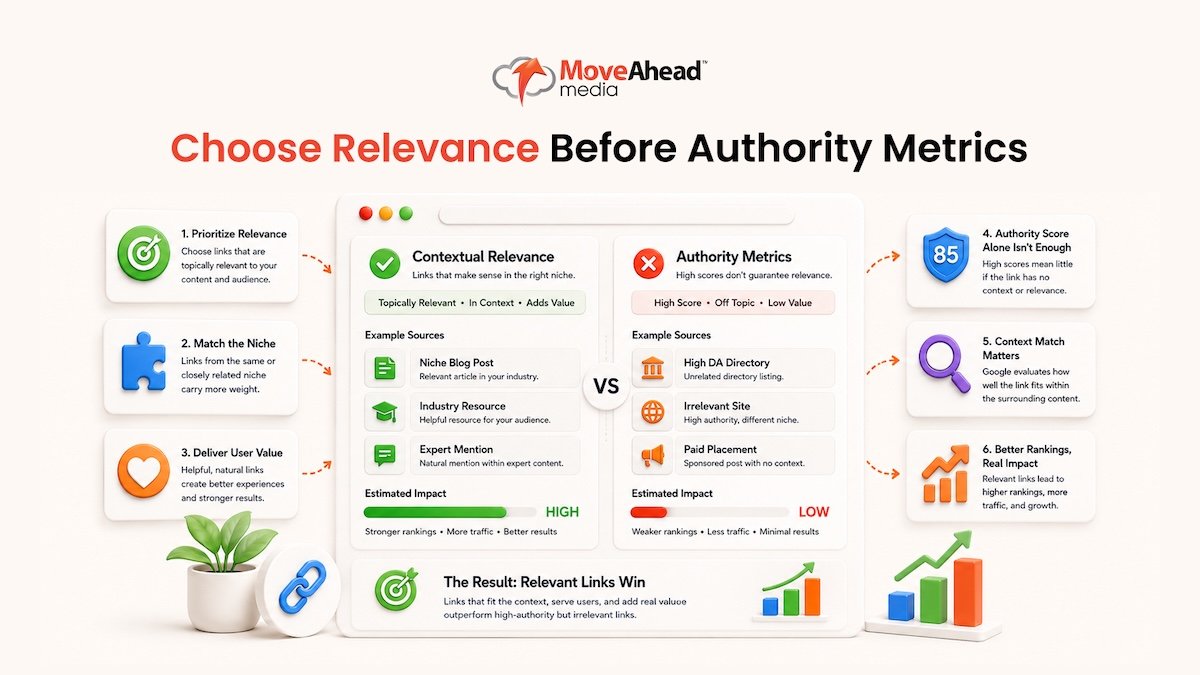
It is easy to get fixated on domain authority scores and chase links from any site with a high domain authority score. However, the problem is that Google cares far more about whether a link makes sense in context than what a third-party metric says about the linking site. A link from a smaller, genuinely relevant Australian business publication will often do more for your rankings than one from a high-authority site with no connection to your industry. When we talk about the context of your SEO activity, this is exactly what we’re referring to. Before pursuing any link opportunity, it is worth asking a simple question: would this website’s audience actually benefit from finding my business here? If the answer is no, the link is unlikely to carry much weight or move the needle enough for you to see your rankings improve.
Avoid Link Schemes and Low-Quality Paid Links
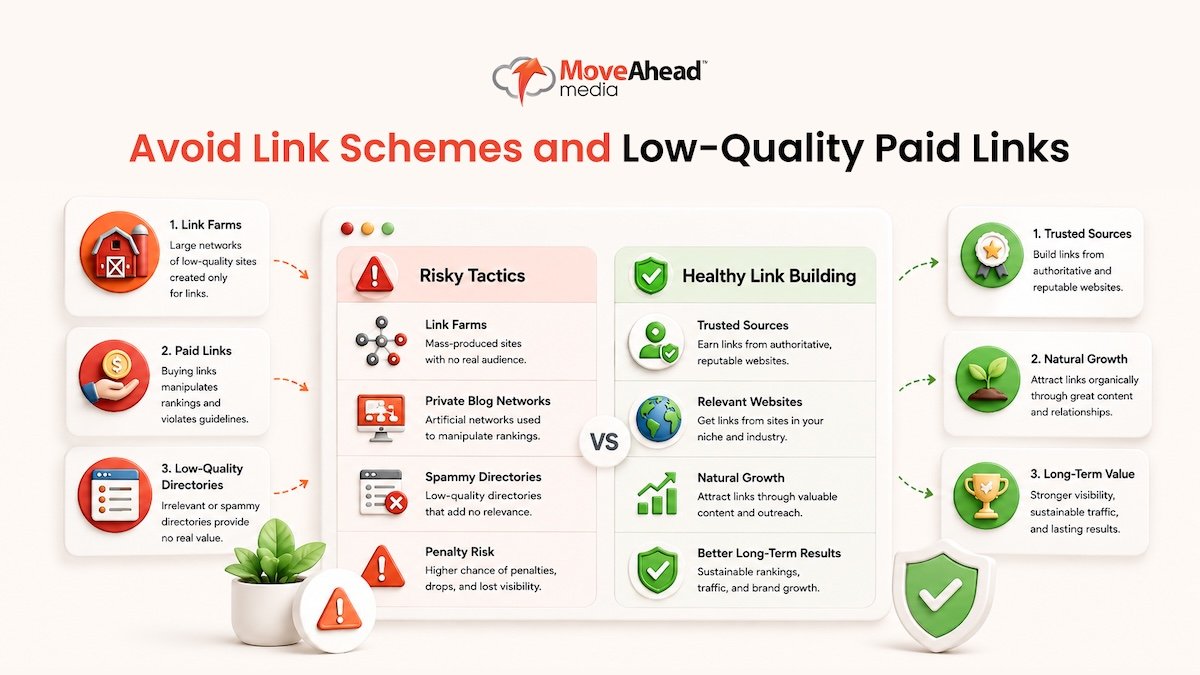
Bulk link packages promising fast results are almost always built on shaky foundations. These typically involve link farms, automated blog networks, or directories stuffed with unrelated businesses, none of which Google likes to see websites use to try and improve their rankings. Google’s algorithms have become increasingly sophisticated at spotting unnatural patterns, such as a sudden influx of links appearing all at once from random or low-quality domains. Getting flagged can result in a manual action against your site, which is often far harder to undo than the effort it took to avoid in the first place. The safer path is slower but far more effective. Building relationships with genuinely relevant sites takes longer than buying a package, but the results hold up under scrutiny rather than collapsing the moment Google updates its algorithm.
Use Natural Anchor Text
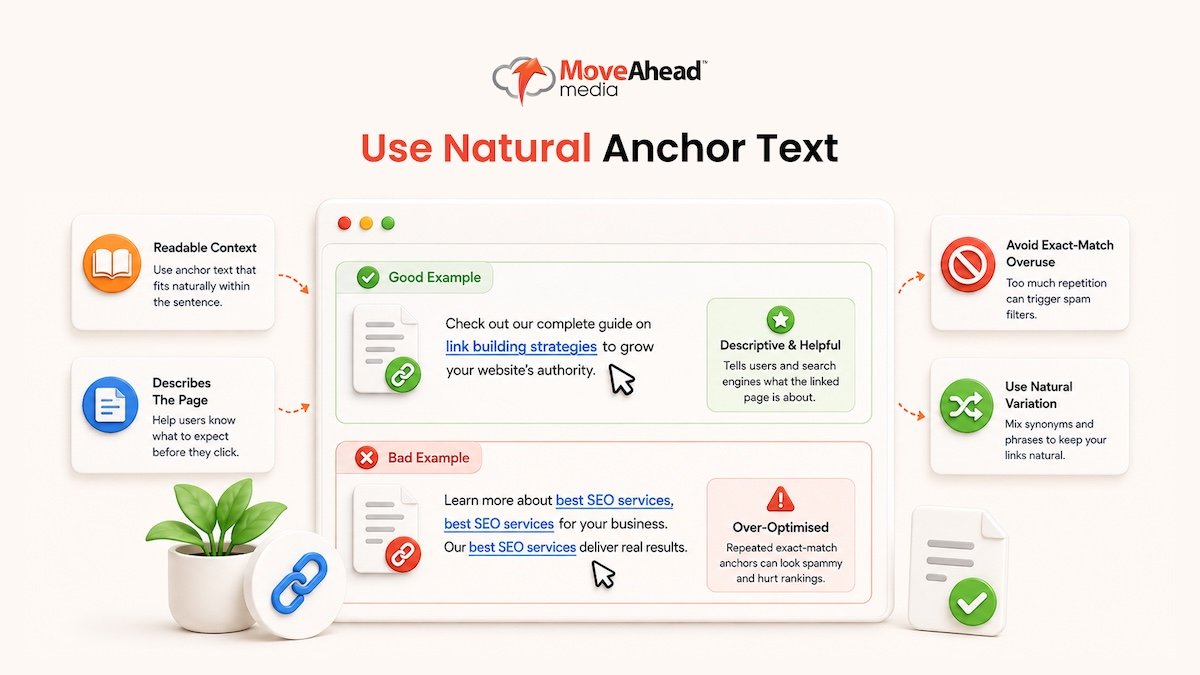
The anchor text wrapped around a link tells both users and search engines what to expect when they click it. Overly optimised anchor text, repeated identically across dozens of links, is one of the easier patterns for Google to detect as manipulation. Natural link profiles include a healthy mix of anchor types. Some links use your business name, others use a general phrase like “click here” or “read more,” and only a small proportion use an exact keyword match. Writing anchor text the way a genuine reader would phrase it, rather than optimising purely for search engines, tends to produce a far more natural-looking profile over time. This also makes for a better experience for anyone actually clicking the link.
Build Links Through Real Local Authority
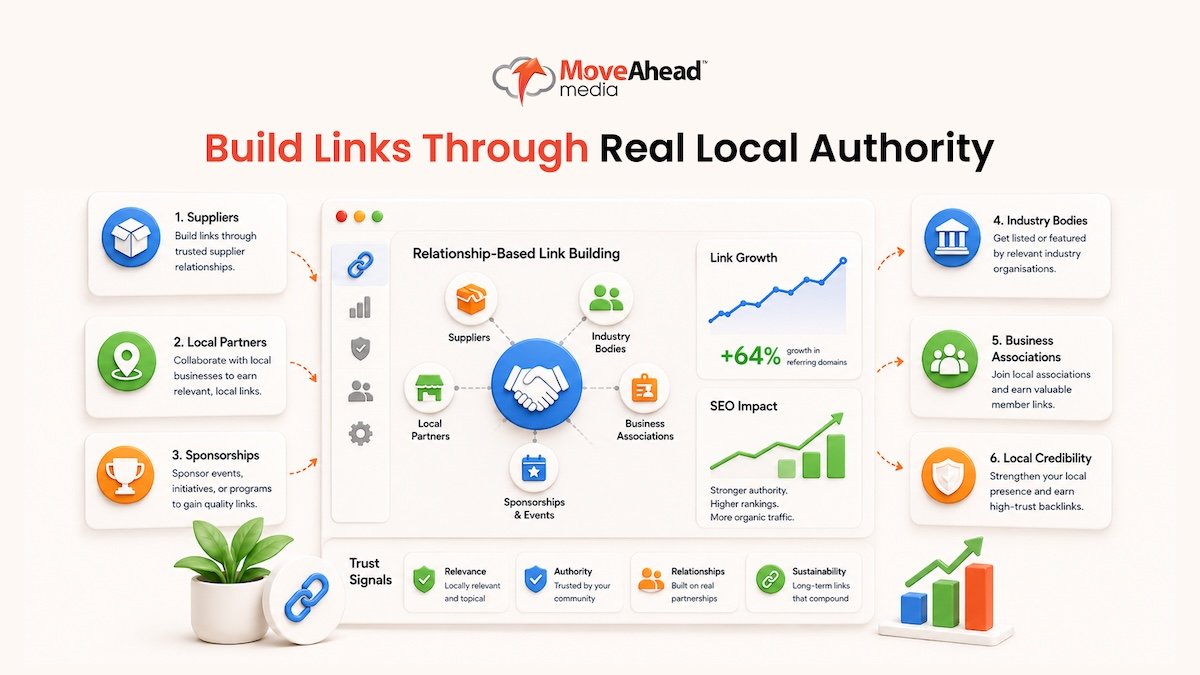
Some of the most valuable backlinks come from within your own community rather than a cold outreach campaign to strangers. Local business associations, industry bodies, event sponsorships, and supplier relationships will often hand out links without much persuasion required. Being featured by a respected local publication or contributing genuinely useful insight to an industry body tends to produce links that carry real weight with both readers and search engines. These connections also tend to bring referral traffic alongside the SEO advantage, which a purely transactional link rarely does. Our Link Building Services team specialises in this kind of relationship-driven outreach, helping businesses build a backlink profile that has genuine local authority.
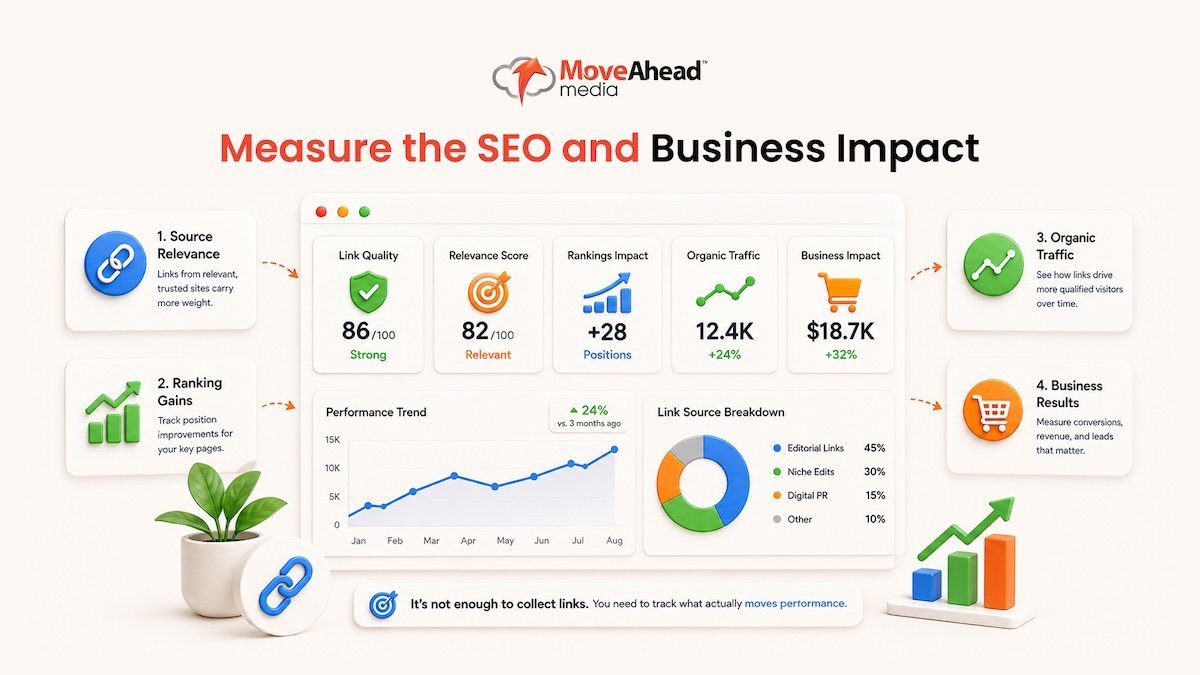
Measure the SEO and Business Impact
It is not enough to simply accumulate links and hope they help. Reviewing where your links come from, how relevant those sources are, and whether your rankings and organic traffic are actually improving gives you a much clearer picture of what is working. Watch for warning signs too, such as a sudden spike in low-quality links you did not request, which can sometimes indicate that you are attracting the wrong type of traffic, or that you are the target of a link farm that’s looking to hijack your content. Disavowing harmful links as soon as you see them protects the progress you have already made.Final Thoughts
Pairing link building with strong, useful content tends to produce the best long-term results, since good content naturally attracts links without you needing to ask. Our Content Marketing Services team can help you create resources that other websites want to reference organically. The best backlinks should make sense to users first and search engines second. When a link genuinely helps someone find useful information, it tends to satisfy Google’s ranking algorithm. If you are ready to build a backlink strategy that holds up over time, our SEO Services in Sydney page explains how link building fits into a broader approach.