You click on a website and it loads instantly. The visuals are striking enough to build trust and prompt action, but as you scroll through the homepage, you can’t find the contact details. The email address is buried deep on another page, completely hidden from a user who doesn’t have the time to click through every tab.
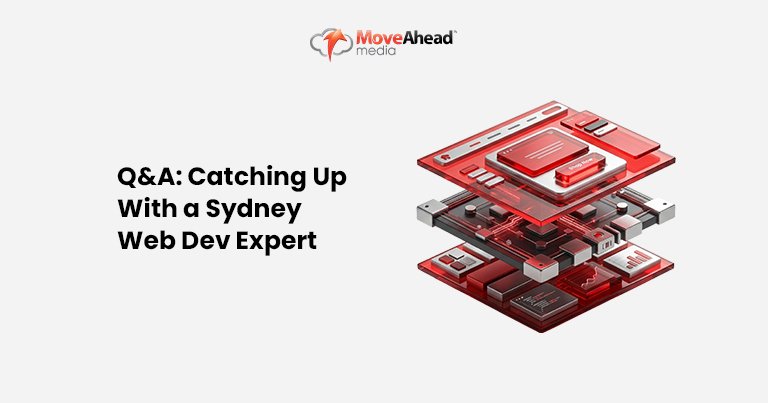
Maybe it doesn’t matter that much. It’s just a tiny error in the grand scheme of things, right? Wrong. We sat down with our web developer in Sydney, Fai, to understand why these seemingly minor details deserve your full attention.
Pull up a chair and let’s get right into it.

Why Your 5-Year-Old Website is Costing You Sales
You’re constantly adapting your business strategies to a shifting market, so why does your website always fall to the bottom of the priority list? Perhaps because you view it as a finished task. It’s online; people search for your brand and they find it, even if it’s currently a jumble of disorganised pages that break on a phone screen. You might think, “But it looks spectacular on a desktop.” Unfortunately, that doesn’t matter anymore.
According to Fai, the costs of leaving it alone are huge.
“The most immediate cost is usually speed,” she says. “Older sites are often built on bloated frameworks or hosted on infrastructure that hasn’t kept pace. Google factors page speed directly into rankings, so a slow site isn’t just a bad experience, it’s an invisible ceiling on your organic traffic.”
That’s one major reason your sales might be dipping. The second is not optimising for mobile.
As Fai puts it: “Standards for mobile design have shifted dramatically since 2021. What passed as mobile-friendly back then often looks cramped and clunky on today’s screens.”
And if you need more convincing, Fai explains that buyer habits have evolved, too:
“Conversion patterns have changed. Customers now expect live chat, frictionless contact options, and social proof front and centre. If your site was built before those became standard, it’s probably not set up to capture leads the way a modern site would.”
If you haven’t made any changes in the last five years, it might be time for a website upgrade for your business.
The Secret to Blending Beautiful Design with SEO
Just like a hot summer day and a dip off the Australian coast, beautiful design and SEO are breathtaking together. When you’re able to master both of these elements, your customers will willingly engage with your brand.
But many businesses still get this wrong. As Fai shares:
“Where teams go wrong is treating SEO as something you layer on after the design is done, or letting SEO requirements make the design feel clinical and keyword-stuffed.”
Your strategy should embed SEO into the web design process from day one. This means focusing on the inevitable technical SEO implementation you wish you could gloss over:
“The way we approach it is by making sure the information architecture—how pages are structured and how they link to each other—is built with search intent in mind from the start.”
If you aren’t sure what that actually looks like in practice, Fai breaks it down:
“That means headings, page hierarchy, and content flow are all doing double duty: guiding the user visually while also giving search engines a clear signal about what the page is about.”
And there you have it. That’s the secret. Good design supports SEO, and if you do it right, the charisma your brand will have is unmatched. You’ll look great and rank well, and that’s exactly what’s going to set you apart from the competition.

3 Non-Negotiable Features for Aussie Websites in 2026
A custom website design is the front-runner for success. You get to build a site that is unique and reflective of your business, which is how you solidify trust with your customers.
The burning question remains: what are the three key modern website features you need to be prioritising? That’s exactly what we asked Fai.
Core Web Vitals Compliance
“Google’s page experience signals are baked into rankings now,” Fai explains. “Australian customers are used to fast digital experiences with banking apps and streaming. If your site lags, they’ll leave. You want your main page content loading in under 2.5 seconds with minimal layout shifts.”
Genuine Local Social Proof
“Aussie audiences are sceptical by nature,” Fai says. “Generic five-star reviews don’t cut it anymore. You need named testimonials, ideally with photos or video, from recognisable Australian businesses or suburbs. Integrating your actual Google Reviews on-site is a strong move.”
Accessibility Compliance
“Web accessibility is becoming less optional for businesses of any real size under Australia’s DDA obligations,” Fai says. “But beyond compliance, accessible design just makes sites easier for everyone to use. Better contrast, clearer navigation, and proper alt text are just good practice.”
Once your Aussie website has these features, the impact of your business will magnify (seriously, test it out and see for yourself).

Let’s Upgrade Your Digital Storefront
A website that operates in the past is self-defeating. Imagine pouring your budget into Meta ads and creating extraordinary content, only for your website to be the reason your customers aren’t converting. Wasted effort. Wasted budget. And of course, wasted time.
Working with a web developer in Sydney who understands the importance of a functional website changes everything. If you’re ready to upgrade your digital storefront, reach out to our Sydney web dev team today.