Facebook Instant Articles have been discontinued for several years now, and the reasons why were pretty obvious. That being said, they still come up in older marketing guides and forum threads. If you have been planning your content around it or had come across the name and wanted to know more about them, this guide explains what happened and where to focus your time, money, and effort in 2026.
If you need a Facebook strategy for Australia-based businesses, understanding what happened is important, as is knowing what you can do instead. Today, we’ll explore just that, as well as share some tips that can help you get more from your social media and content marketing activity.
What Were Facebook Instant Articles?
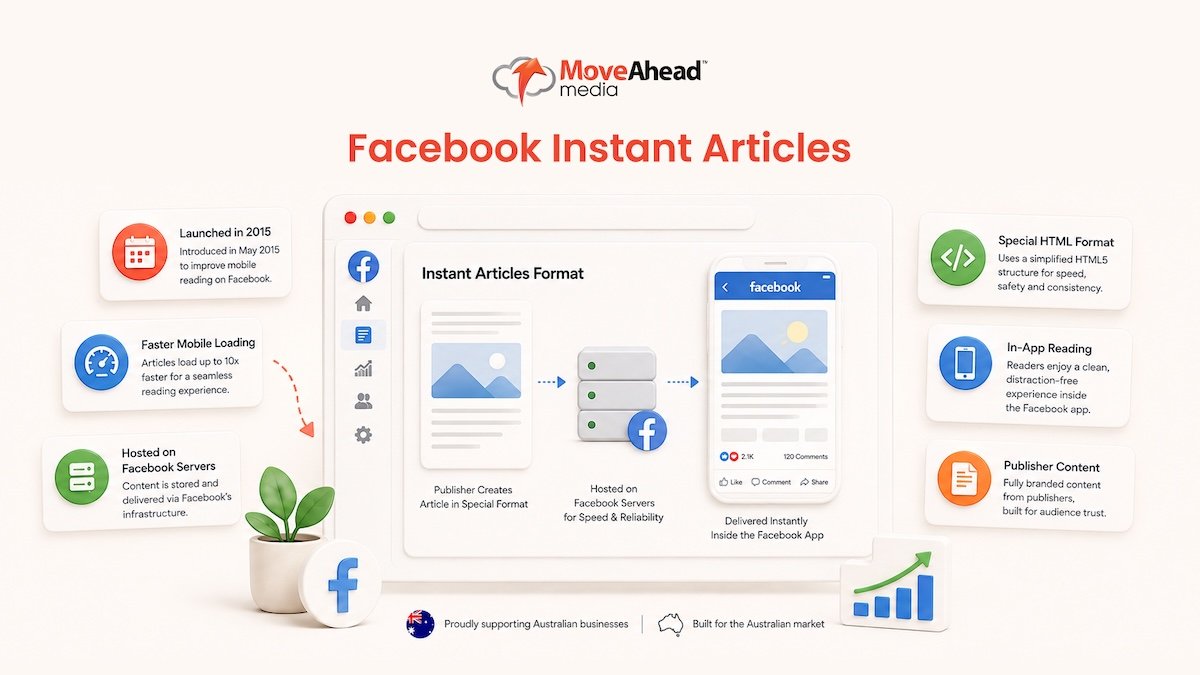
Instant Articles were launched way back in 2015 as a Facebook publishing format post that let content creators and publishers host their articles directly on Facebook’s own servers. Marketed as a faster way of distributing and accessing content, Instant Articles loaded far quicker than standard mobile web pages, which kept readers inside the Facebook app rather than being sent to an external site. Publishers could either sell their own advertising within these articles or let Facebook place ads on their behalf. For several years, this made Facebook Instant Articles an attractive option for large blogs and news organisations wanting both speed and the ability to scale their output.Why Instant Articles Stopped Being Relevant
Meta announced in October 2022 that Facebook Instant Articles would be coming to an end soon, with support fully ending by April 2023. The company pointed to changing user behaviour as the main driver, noting that news links made up less than 3% of what users saw in their Facebook feeds. At the same time, Meta was investing heavily in short-form video content, called Reels, and was planning to reshape the entire Facebook feed around that format instead. Once support ended, links shared on Facebook simply directed readers to the publisher’s own website, just as they do before and up until today. This is a useful reminder for any Australian business relying on platform-specific tools. Features built by Facebook can disappear whenever they no longer suit the platform’s priorities, so building your strategy around them alone carries risk. This is also true for any tools you may be using for your marketing or business development; they might be really helpful now, but if they went permanently offline tomorrow, what would you do?
What Australian Businesses Should Focus on Instead
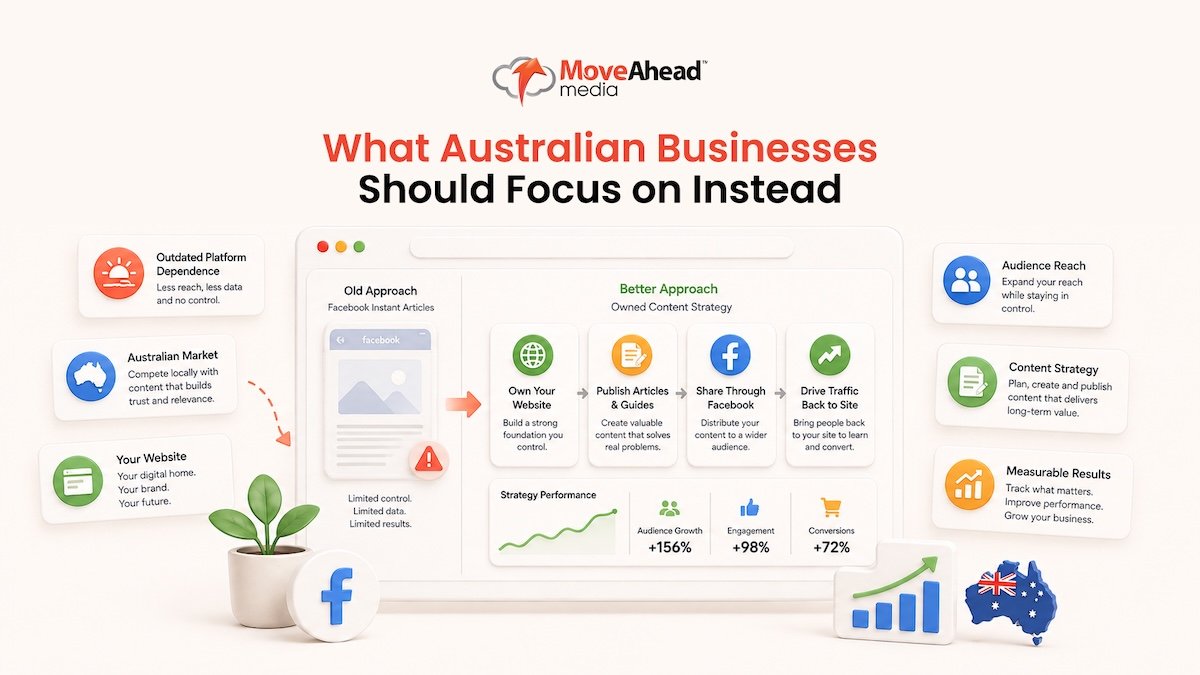
Rather than chasing whatever Facebook is supporting at the moment, the smarter approach is to build a social media content strategy around your own website. Publish full articles, guides, and case studies there, then use Facebook to share that content with a wider audience. This keeps you in control. Your website and its content are yours regardless of what Facebook changes next, and you have full analytics access to explore visitor data, enquiries, and general engagement, rather than depending on a platform’s internal reporting (which we all know isn’t the best or easiest to navigate). A solid Facebook content strategy for 2026 would be to use the platform as a place where you can hook users and drive engagement. Share compelling snippets, captivating visuals, and short videos that link back to the full article on your own site.How to Turn Facebook Content Into Leads
Getting attention is only half the job. The true value comes from converting that attention into genuine enquiries, and this is where many businesses fall short. Using your best-performing organic posts to craft engaging paid ads can extend your reach well beyond your existing followers. Our Facebook Ads Services team can help identify which content is performing best and how you can use it to improve awareness and conversions. For businesses focused specifically on generating enquiries rather than general awareness, Facebook Lead Gen Ads tend to outperform standard traffic campaigns, since they remove an additional barrier by letting people submit details without leaving the app. Whichever route you take, speed is very important once a lead comes through. Following up within minutes rather than hours consistently produces better conversion rates, since interest generated on social media is short-lived and leaves only a narrow window to strike.
Content Formats That Work Better Now
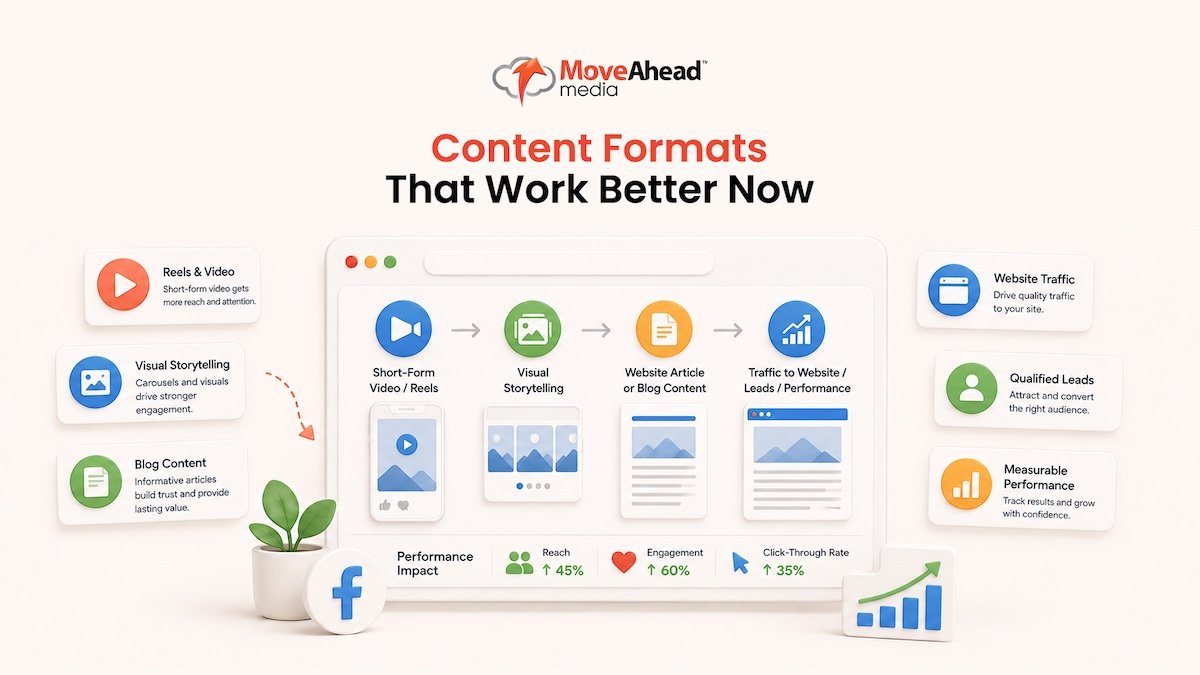
Facebook’s algorithm increasingly favours on-site video, which you likely know as Reels, as well as strong visual storytelling, over plain text links. This makes well-produced content more important than ever if you want your articles and posts to actually get seen. Short, engaging videos that hook viewers in the first few seconds tend to perform far better than static images or text-heavy posts. Carousels and behind-the-scenes content also often encourage genuine engagement rather than simply scrolling further down their feed. Facebook works best as support for your lead generation process rather than the final destination for users wanting to convert. Your website should still be doing most of the heavy lifting, converting the interest and attention that Facebook helps generate. If your current content feels flat or dated, investing in better production is often the fastest way to see improvement. Our Creative Marketing Services team can take what you’ve learned from this Facebook Instant Articles guide and help you take control of your social media and content marketing.